

2025-05-27
As the new energy vehicle industry thrives, the consensus across the sector has become clear: "the first half is electrification, and the second half is intelligence." Meanwhile, the "new three core components" of smart vehicle technology—autonomous driving chips, full-domain operating systems, and intelligent chassis—have stepped into the spotlight.
As one of the "new three core components," the intelligent chassis plays a pivotal role in the driving experience and safety of smart vehicles. Against the backdrop of the rapid rise of advanced driver assistance functions (ADAS), numerous enterprises have made the intelligent chassis track a strategic focus.
Facing this "must-compete arena," domestically, a highly promising emerging enterprise—BIBO (Shanghai) Automotive Electronics Co., Ltd. (referred to as "BIBO")—has set its sights on technological innovation in intelligent chassis for the next decade since its establishment.
"The chassis industry is undergoing a qualitative transformation from 'function superposition' to 'system integration.' Only enterprises with XYZ three-axis fusion technology can win the future," emphasized Liu Xiaohui, founder and president of BIBO.

Liu Xiaohui, President of BIBO
With the mission of leading the breakthrough and innovation of core technologies for China's intelligent brands, BIBO has made a breakthrough with its XYZ three-axis fusion technology on the eve of the explosive growth of the intelligent chassis track, striding forward in the race of technological innovation for intelligent chassis.
Intelligent Chassis Becomes the Focal Point of Competition
XYZ Three-Axis Fusion Reinvents Automotive Driving Experience
According to the ADAS Configuration Database of Gasgoo Research Institute, the standard-equipment penetration rate of passenger vehicles with L2 and above advanced driver assistance systems (ADAS) in China reached nearly 48% in 2024, while that of models equipped with NOA (Navigation on Autopilot) function as standard exceeded 7%. It is predicted that by 2030, the market penetration rate of smart vehicles with L2 and above functions in China will surpass 90%, among which the number of vehicles equipped with NOA function as standard will exceed 24 million. Faced with the exponentially growing market demand, the intelligent chassis, as the central nervous system connecting actuators and digital decision-making, has become increasingly prominent in strategic value.
Behind the gradual increase in ADAS penetration, an intelligent transformation is quietly spreading across the industry. At the 2025 Shanghai Auto Show, a statement by Li Bin, Chairman of NIO Inc., sparked heated discussions in the industry. He pointed out that autonomous driving chips, full-domain operating systems, and intelligent chassis are the "new three core components" of smart vehicle core technologies. Looking at the entire market, the "new three core components" have long become a strategic focus for many automakers' layouts.
Notably, to meet the extreme demands for vehicle control and response speed driven by the ADAS trend, and to provide consumers with better driving experience and safety guarantees, the intelligent chassis— as the core cornerstone of ADAS— must achieve integrated innovation. Currently, within the industry, the XYZ three-axis fusion technology for intelligent chassis is widely regarded as an irresistible trend.
In traditional automotive chassis systems, subsystems such as braking, steering, and suspension have long operated independently. This segmented technical architecture can no longer meet the demand for integrated vehicle control in the era of smart electric vehicles. In contrast, XYZ three-axis fusion refers to the in-depth integration of the vehicle's three-dimensional control systems: the longitudinal braking system (X-axis), lateral steering system (Y-axis), and vertical suspension system (Z-axis). Through a unified control algorithm and communication architecture, it achieves a revolutionary breakthrough in integrated vehicle motion control.
Liu Xiaohui emphasized: "The intelligent chassis with XYZ three-axis fusion will reshape the underlying logic of integrated vehicle motion control. BIBO's XYZ three-axis fusion intelligent chassis will provide customers with a more comfortable riding experience, a more extreme handling feel, and a more solid sense of safety."
In terms of driving experience, the XYZ three-axis fusion technology can achieve millisecond-level coordinated response. When the vehicle corners at high speed, the system intelligently coordinates the distribution of braking force, the intensity of steering assistance, and the support stiffness of the suspension, keeping the vehicle in the optimal posture at all times and significantly enhancing the balance between handling precision and riding comfort. In addition, in response to the multi-scenario requirements of future ADAS, XYZ three-axis fusion can improve the overall safety performance of the vehicle in terms of redundancy, fault tolerance, and other aspects.
Insight into Market Transformation Opportunities
BIBO "Takes the Lead" in Defining the Next-Generation Intelligent Chassis
"The intelligent chassis with XYZ three-axis fusion is a next-generation product defined with Chinese automakers as the primary drivers, amid the rise of China's new energy vehicle industry. It represents a rare historical opportunity for China's auto parts industry to achieve a corner overtaking," emphasized Liu Xiaohui.
It is reported that prior to founding BIBO, Liu Xiaohui already had years of entrepreneurial experience in the automotive chassis sector. At that time, having insight into the imminent new round of transformation in the intelligent chassis industry and recognizing that XYZ three-axis fusion would become the focal point of industry competition in the next phase, Liu resolutely left his previous startup to establish BIBO.
Positioning himself as an industry innovator, Liu Xiaohui aims for BIBO to lead the next stage of transformation in the intelligent chassis industry. He has formulated a clear product roadmap and business strategy for BIBO: gradually mass-producing XYZ three-axis products in phases, fully leveraging industry resources to build a cooperative ecosystem, with the goal of leading the pinnacle of XYZ three-axis product innovation.
In the second year after its establishment, BIBO achieved small-batch delivery of Two-Box products and secured a fixed-point order for its One-Box product. In the same year, due to its outstanding performance, BIBO gained recognition from leading industry investment institutions and completed Series A financing involving Sequoia Capital, NIO Capital, Orient Fortune Capital, and other firms.
In 2023, while mass-producing the One-Box product, BIBO keenly seized the window of explosive growth and technological iteration in air suspension products. Through strategic financing, it introduced a key partner—Baolong Technology, a domestic leader in air suspension—to enter the Z-axis control field of intelligent chassis. Only 8 months after the cooperation was established, BIBO achieved mass production of the intelligent air supply system for air suspension, becoming one of the first startups to mass-produce this product.
In 2024, BIBO continued to improve its product layout through strategic financing, welcoming Henderson Land Group as a strategic investor to enter the intelligent steering market. This completed the final piece of the puzzle for its XYZ three-axis product portfolio, making BIBO one of the earliest startups in China to fully establish its XYZ three-axis intelligent chassis product lineup. Combining a keen market sense with rapid strategic cooperation, BIBO has taken the lead in building an ecological moat for XYZ three-axis fusion.
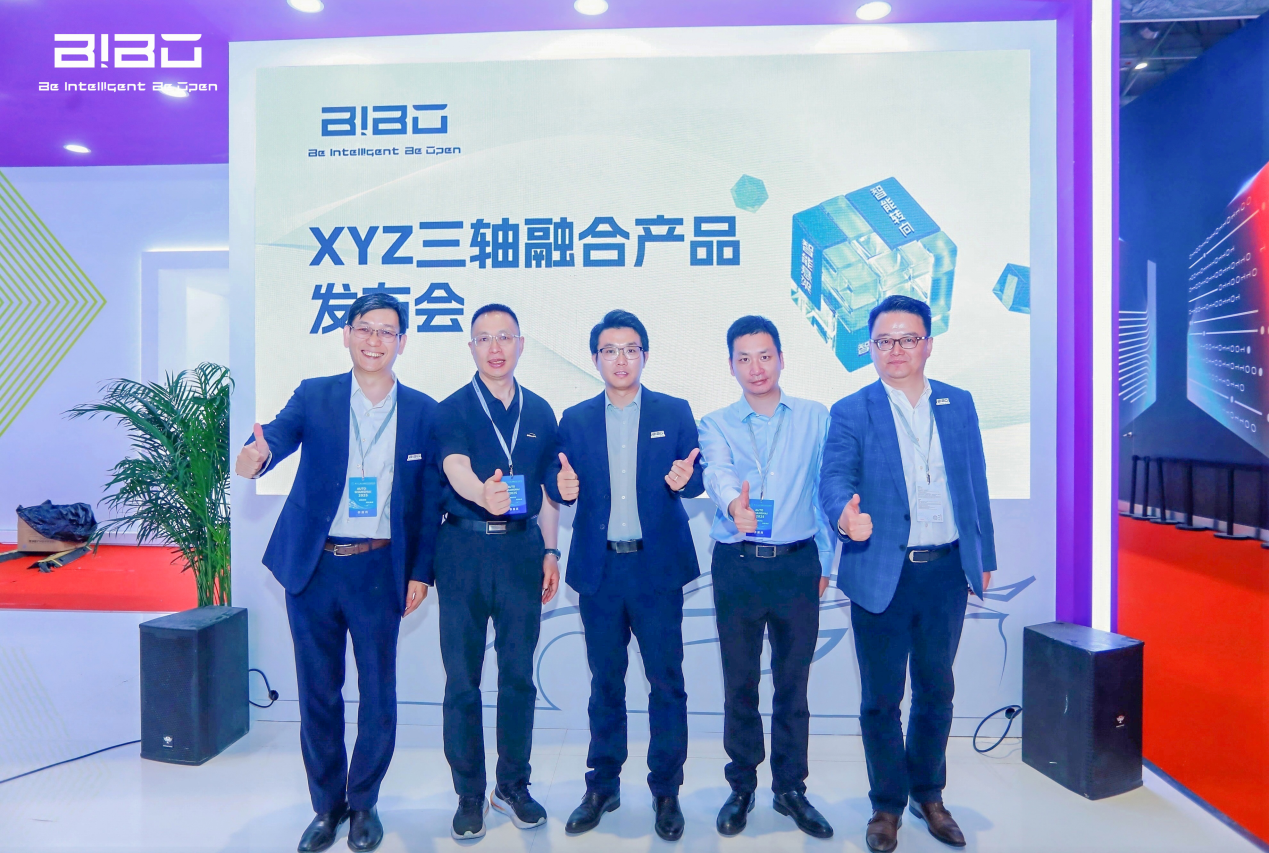
Group Photo of Leaders from BIBO, Baolong Technology and Henderson Land Group
By the end of 2024, BIBO fully demonstrated its intelligent chassis XYZ three-axis products and integrated control solutions through real-vehicle tests during winter calibration. It conducted in-depth exchanges with experts from over 20 mainstream original equipment manufacturers (OEMs), jointly discussing and defining the development direction of intelligent chassis for the next phase, and further consolidating its leading position in the layout of XYZ three-axis products.
Currently, BIBO's shipments of full-stack intelligent braking products have approached one million units, with monthly deliveries exceeding 50,000 units. The company's intelligent suspension air supply system (BAS) has a full order book and will be delivered to customers in large quantities within 2025; the intelligent rear-wheel steering system (BRWS) will officially enter mass production by the end of 2025. In addition, BIBO's new products such as the electro-mechanical braking system (BEMB), steer-by-wire system (BSBW), and chassis domain controller (BCDU) will also be put into mass production sequentially in 2026. It is reported that the company's subsequent orders have reached nearly 3 billion yuan.
At the same time, BIBO is at the forefront of the industry in its overseas layout. A number of its intelligent braking products have been sold in multiple overseas countries and regions, including European and American markets.
Three Core Platforms Empower
Cutting-Edge Technological Innovation Forges the Future
Over the past decade, driven by electrification and intelligence, chassis technology has been constantly evolving. In the next ten years, propelled by technologies such as XYZ three-axis fusion and AI, intelligent chassis technology will undergo rapid iteration and continuous transformation.
In an interview, Wu Ziping, Senior Vice President of BIBO, stated: "The intelligent chassis is on the verge of a new round of transformation, which will be a comprehensive competition in product definition and efficient technology development. BIBO has taken the lead in completing the layout of XYZ three-axis products and seized the leading position."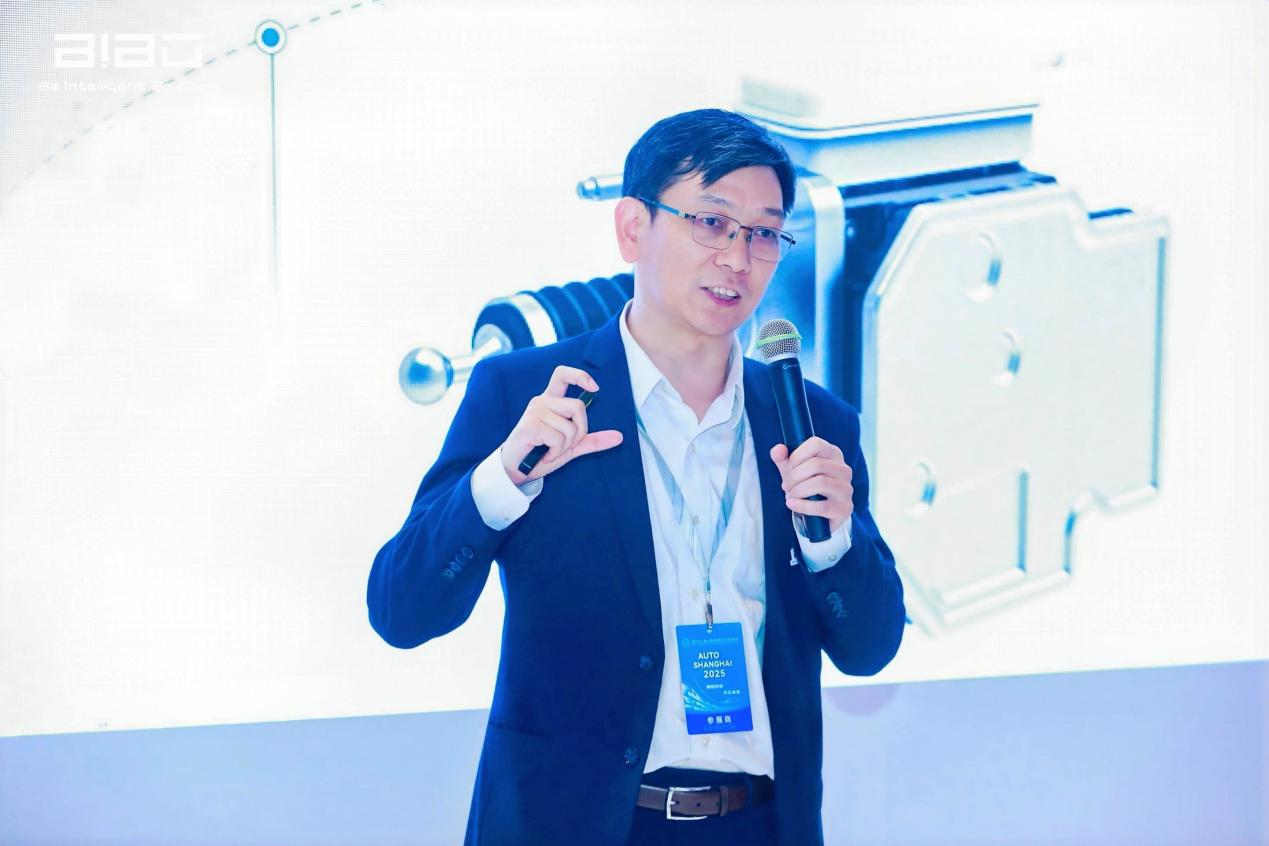
Wu Ziping, Senior Vice President of BIBO
Prior to joining BIBO, Wu Ziping served as Vice President of R&D for the Asia-Pacific region's braking systems at a global automotive components giant. He once led the mass production and implementation of hundreds of projects for multiple products of the company, including EPB, EBB, ESC, and IBC (One-Box). With an in-depth understanding of the global development trends of intelligent chassis, he is a technical leader in China's intelligent chassis sector. Wu's broad international perspective and profound industry experience, combined with President Liu Xiaohui's role as an "industry innovator," form a golden combination of "technical leader + industry trailblazer," jointly steering BIBO's development in the next phase.
As learned from Gasgoo, since its establishment in 2021, BIBO's intelligent chassis platform has iterated from Version 1.0 to Version 3.0. BIBO's 1.0 platform—drive-by-wire chassis—features coordinated braking, steering, and suspension systems based on the CAN network, and has achieved full mass production. The 2.0 platform—intelligent chassis—realizes three-axis fusion of products such as braking, rear-wheel steering, and semi-active suspension, with partial implementation already completed. For next-generation chassis technology, BIBO is among the first enterprises to lay out the 3.0 platform's high-level intelligent chassis, which integrates cross-domain technologies including EMB braking, steer-by-wire, and fully active suspension.
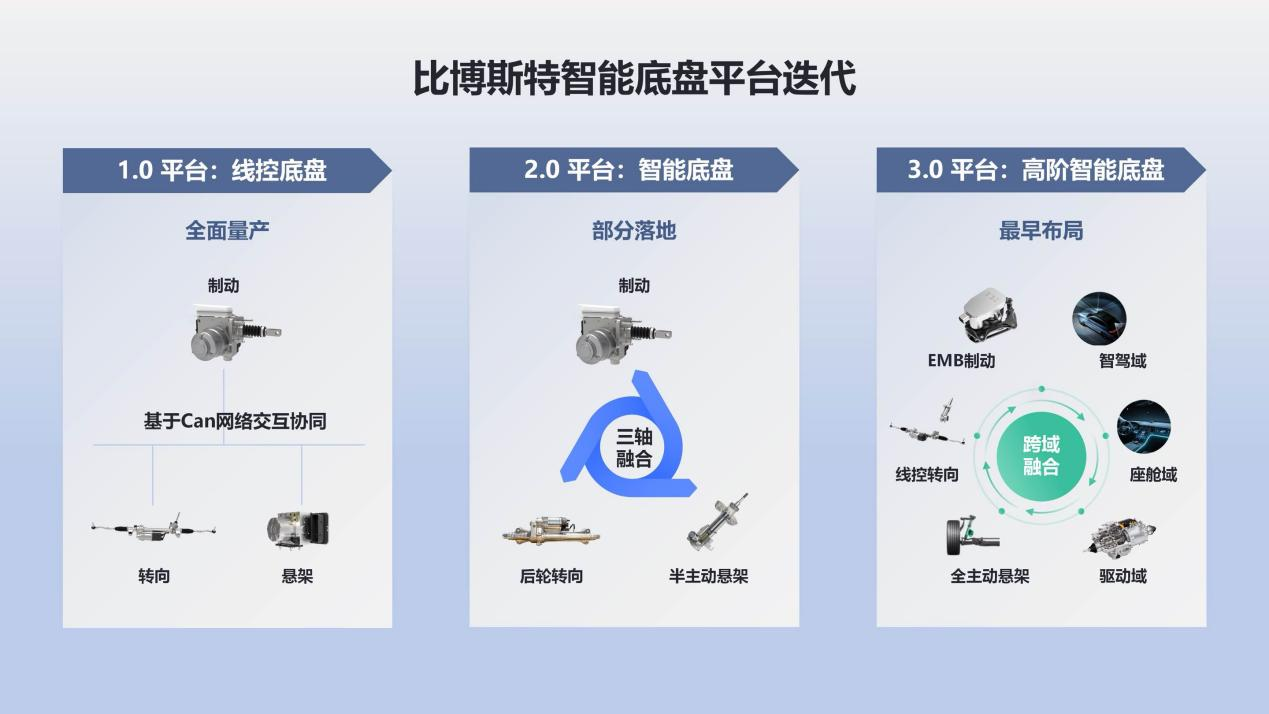 The Iteration of BIBO's Intelligent Chassis Platform
To support the rapid iteration of products, BIBO has built three core technology platforms—full-stack self-developed, modular, and generalized—comprehensively boosting the rapid surge of three-axis fusion products. At the just-concluded Shanghai Auto Show, Wu Ziping released the latest achievements of the company's three technology platforms on behalf of BIBO.
BIBO's "BEAT" software platform has iterated from the BEAT 1.0 platform based on standard AUTOSAR CP to the BEAT 2.0 platform, which is modular, lightweight, efficient, and serves chassis domain control. It boasts unique advantages such as a modular system architecture, lightweight basic software, and multi-domain fusion development capabilities.
BIBO's "Xuanjia" fully localized hardware platform has undergone full benchmarking against mass-produced international mainstream solutions from multiple perspectives including requirements, component selection, design, calculation, and testing, ensuring the product's equivalent functionality, safety, and reliability. The platform has established cooperation with numerous domestic electronic component suppliers, is compatible with the development of BIBO's entire product line, and has been fully validated on a number of core products.
In addition, BIBO also launched the Xihe Intelligent Chassis Fusion System. As an integrated domain control architecture, this system can achieve high-speed real-time response and three-axis coordinated control, redefining the driving experience. It can be integrated with advanced driver assistance systems (ADAS) to enhance functional support, while optimizing energy recovery to extend driving range. Notably, the system realizes an intelligent platform through AI and data fusion: by feeding back customer usage data, it continuously improves the performance of the intelligent fusion platform. Meanwhile, it utilizes simulation equipment for better driving development and testing—numerous special working conditions can be developed online instead of on real vehicles, significantly improving development efficiency and safety.
Conclusion: As China's market has emerged as an innovation hub for ADAS technology, the intelligent chassis has become a strategic battleground for enterprises. Against this backdrop, BIBO has seized the first-mover advantage on the eve of the intelligent chassis boom through precise product layout, original technological innovation, and extensive industrial collaboration. BIBO's full-stack product portfolio and three-axis fusion strategy not only break the monopoly of foreign capital but also propel China's automotive industry into a new phase from "technological catch-up" to "standard-setting." BIBO's rapid rise confirms the new logic of industrial transformation: core technological breakthroughs must be built on system-level innovation. In the future, with the surge in demand for ADAS, BIBO is poised to become a core player in the global intelligent chassis sector.
Phone: 010-63940482
Email: bibo@bibo-sh.cn
Investment Cooperation: 16621178430
Bibo Official Account
© 2022, gsir 由 mfshop 提供支持